
Monday, February 28, 2011
Red Carpet Macabre
What's the scariest outfit ever worn to the Oscars? I'd have to go with this Goth-funeral ensemble donned by Helena Bonham Carter back in 1987. Carter, who I love as an actress, is quite the eccentric dresser, and has been busted repeatedly by the fashion police over the years. Here she sports a look that only Tim Burton could love:


Sunday, February 27, 2011
Book vs. Film: True Grit

[For an overview of the scoring system, see yesterday's post, and for my earlier review of the film itself, click here.]
What stands out most to me about the movie is the way Jeff Bridges embodies Rooster Cogburn. In the Charles Portis novel, the character is conveyed mostly through dialogue, but Bridges brings Cogburn to life with a full repertoire of mannerisms. Nobody does scruffy and drunken better than Bridges.
The novel does a much better job of establishing the historical/
political context, providing a clear understanding of the state of affairs not just in the Indian Territory but also in Washington, D.C. Readers learn plenty about Civil War-fare, not to mention real-life outlaws like the James brothers.
The film's directors, the Coen Brothers, are faithful to the key scenes from the novel, but still manage to add their personal touch (e.g., the undertaker is transformed into a true grotesque by his repeated point to Mattie that she can kiss the corpse of her father; the hanging scene offers some black comedy when the Indian's speech is preempted by the hangman).
In the novel, Cogburn and LaBoeuf remain together throughout the hunt for the murderous Tom Chaney. This lack of separation precludes some of the suspenseful moments and surprises that work so well in the film.
On the other hand, the climax is even more rousing in the book version of the narrative (two words: more snakes!). To me, there also seemed to be less of an anti-climax in the novel--Cogburn's desperate ride on Little Blackie to save the snakebitten Mattie does not play out as long as it does in the film.
Perhaps the key distinction between the two versions is that Mattie Ross (wonderfully played by Hailee Steinfeld) is a more endearing figure in the film. Because of its respective, first-person narration, the novel foregrounds Mattie's adult voice, and she accordingly comes across as more opinionated than precocious, more grouchy than plucky. The romantic feelings that LaBoeuf (Matt Damon) sparks in Mattie in the film are also noticeably absent in Portis's text.
For these reasons, I give a slight edge to the cinematic incarnation of True Grit (a film that I would love to see rack up awards at tonight's Oscars).
Book: 4
\
\
Film: 6
Saturday, February 26, 2011
Book vs. Film: Winter's Bone
In honor of tomorrow night's Oscar ceremonies, I'll be doing Book vs. Film posts the next two days--covering films that are current nominees. Final scoring, as always, is based on a ten-point-total system. Think of it as having ten good pieces to be distributed on the opposing arms of a scale. Based on which medium is preferred, the scales will be tipped--either slightly or significantly--in that direction (if both versions are valued on an equal level, they will each receive a score of five). First up:


Book:
Film:
To me, perhaps the most surprising aspect of the 2010 film version is its under-emphasis of the winter season foregrounded by its title. There's not a speck of snow to be seen in these Ozarks (I'm assuming that's because of budgeting considerations). Daniel Woodrell's 2006 novel is much more overtly wintry, with the season transcending the status of setting to serve almost as an antagonistic character. The harshness of the climate is conveyed through wonderfully descriptive passages, such as the following: "Clouds looked to be splitting on distant peaks, dark rolling bolts torn around the mountaintops to patch the blue sky with grim. Frosty wet began to fall, not as flakes nor rain but as tiny white wads that burst as drops landing and froze a sudden glaze atop the snow. The bringing wind rattled the forest, shook limb against limb, and a wild tapping noise carried all about. Now and then a shaking limb gave up and split from the trunk to land below with a sound like a final grunt" (p. 58).
The film does a fine job of depicting its characters as people with real lives. These hardly-well-off residents of the Ozarks aren't unevolved cavedwellers. They engage in activities the audience can identify with: going to auctions, throwing birthday parties, playing music and singing songs. Indeed, both the film and the novel on which it is based deserve credit for never pandering to "hick" stereotypes.
That said, the novel delves much more deeply into the background of the characters, not only as individuals but also as a clan. Woodrell shows the Dollys to have strong roots in the region, and his account of the clan's history and ancient religious beliefs gives the book a mythic scope reminiscent of the work of Cormac McCarthy.
In the film, Woodrell's characters are memorably embodied; Jennifer Lawrence and John Hawkes are amazing in the roles of Ree Dolly and Uncle Teardrop, respectively. The gaunt Hawkes exudes quiet menace as Ree's rough, crank-addled yet ultimately devoted uncle (his performance makes it hard to believe that this is the same actor who played the wimpy Sol Star on HBO's Deadwood). Lawrence, meanwhile, shines as the film's teenage heroine, a girl desperate to track down her shifty, crystal-meth-cooking father (if he misses his court date, the family home that he put up for bond will be lost). The talented actress captures both the courageous and anxious sides of Ree's character, and is equally effective whether exhibiting a sharp tongue or a quivering lip.
The film version, though, ignores a key component of Ree's character in the novel: her intimate, quasi-lesbian relationship with her best friend Gail. Much is lost thematically here, because the solace she seeks in Gail's arms only underscores the lack of acceptable male figures in Ree's life.
Director Debra Granik's adaptation is quite faithful to the plot of the novel. But I just wish she would have included a wrinkle from Woodrell's conclusion. When a certain job offer is made to Ree at novel's end, the author raises the possibility that additional sparks will fly from Ree's future interactions with her volatile relatives.
This is an excellent film, one well-deserving of its Grand Jury Prize at Sundance and its Academy Award nomination for Best Picture. It's eclipsed, however, by Woodrell's utterly brilliant book, a work that contends for the laurel of Great American Novel. Thus the lopsided nature of my final ranking of the two versions of the narrative:
Film: 3
/
/
/
Book: 7
Friday, February 25, 2011
The Macabre Republic Oscar Ballot
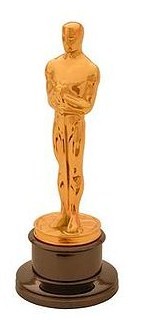
Here's my vote for which nominees should win (not my prediction of who actually will win) the Academy Award in the six major categories:
BEST SUPPORTING ACTRESS:
[ ] Amy Adams, The Fighter
[ ] Helena Bonham Carter, The King's Speech
[ ] Melissa Leo, The Fighter
[X] Hailee Steinfeld, True Grit
[ ] Jackie Weaver, Animal Kingdom
Steinfeld (who arguably belongs in the Best Actress category) towers over the other nominees with her performance as the plucky and intelligent Mattie Ross.
BEST SUPPORTING ACTOR:
[X] Christian Bale, The Fighter
[ ] John Hawkes, Winter's Bone
[ ] Mark Ruffalo, The Kids Are All Right
[ ] Jeremy Renner, The Town
[ ] Geoffrey Rush, The King's Speech
This is the most loaded category on the entire ballot, but the human chameleon Bale is still the clear winner here.
BEST ACTRESS:
[ ] Annette Bening, The Kids Are All Right
[ ] Nicole Kidman, Rabbit Hole
[X] Jennifer Lawrence, Winter's Bone
[ ] Natalie Portman, Black Swan
[ ] Michele Williams, Blue Valentine
Portman's isn't the only dualistic performance in this category. Lawrence masterfully conveys both fierce determination and vulnerability.
BEST ACTOR:
[ ] Javier Bardem, Biutiful
[X] Jeff Bridges, True Grit
[ ] Jesse Eisenberg, The Social Network
[ ] Colin Firth, The King's Speech
[ ] James Franco, 127 Hours
John Wayne made Rooster Cogburn famous; Jeff Bridges makes the character unforgettable.
BEST PICTURE:
[ ] Black Swan
[X] The Fighter
[ ] Inception
[ ] The Kids Are All Right
[ ] The King's Speech
[ ] 127 Hours
[ ] The Social Network
[ ] Toy Story 3
[ ] True Grit
[ ] Winter's Bone
Why The Fighter? Because it has action, drama, comedy, an uplifting storyline, and terrific performances by the entire cast.
BEST DIRECTOR:
[ ] Darren Aronofsky, Black Swan
[X] David O. Russell, The Fighter
[ ] Tom Hooper, The King's Speech
[ ] David Fincher, The Social Network
[ ] Joel and Ethan Coen, True Grit
For all the reasons listed above.
The 83rd Academy Awards ceremony airs Sunday night at 8 on ABC.
Thursday, February 24, 2011
Short Story Spotlight: "From Hell's Heart"

"From Hell's Heart" by Nancy Collins
Herman Melville crosses with Algernon Blackwood and Samuel Taylor Coleridge in this superb piece published in the recent anthology, Classics Mutilated. Collins continues the story of Moby-Dick's Ahab, arguably the greatest Gothic hero-villain in all of American Literature. Thanks to his unholy pursuit of the white whale, the late captain of the Pequod finds himself in thrall to the Devil himself, and must now roam the earth hunting down supernatural creatures to fill Hell's menagerie. In this instance, the harpoon-wielding Ahab tracks the Wendigo, a ravenous beast preying on a trio of trappers in the Canadian wilderness. "From Hell's Heart" is heavy on suspense (and horror, when the Wendigo engages in gory feasting), and melds seamlessly with events and details from Melville's epic novel. Most remarkable of all here is the damned Ahab, a figure full of tragic grandeur and grim determi-nation. Without a doubt, he would make a great series character if Collins ever decided to expand upon her fantastic premise.
"From Hell's Heart" is a must-read not just for all those who know and love Moby-Dick, but also for anyone who appreciates a gripping story.
Subscribe to:
Posts (Atom)